
Back to Blog|31 January 20265 min read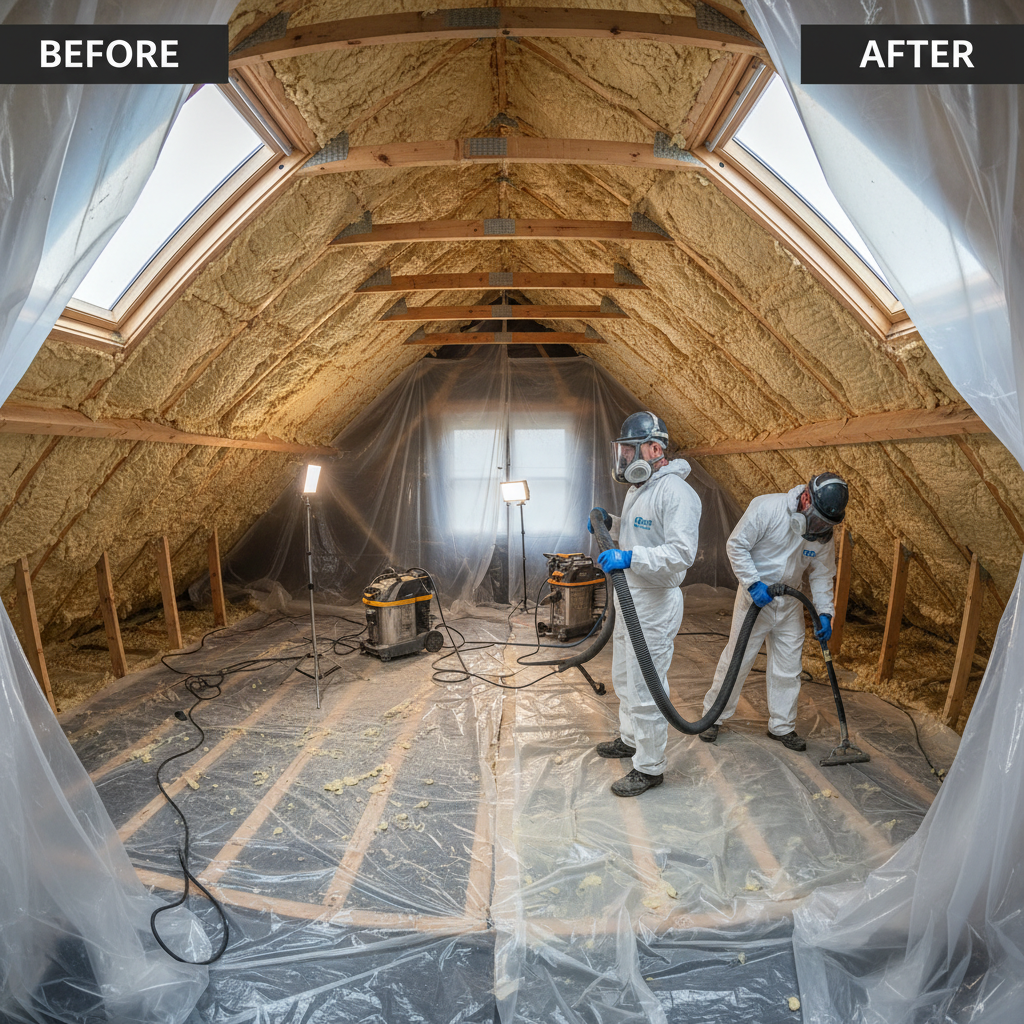
guides
Closed Cell Spray Foam Removal | UK Expert Guide 2026
R
Revive Maintenance Team
Verified Expert
⚠️ Scam Warning: revivemaintenance.co.uk is NOT our website. We are Revive Maintenance Ltd at sprayfoamremovalhelp.co.uk. Read warning →
Revive Maintenance Team
Verified Expert
Meta Description: Discover everything you need to know about closed cell spray foam removal, including its impact on property value, costs, and the removal process.
URL: /closed-cell-spray-foam-removal-guide
If you're a UK homeowner dealing with closed cell spray foam insulation, you're likely facing significant challenges. This type of insulation, while effective in many ways, can pose serious issues when it comes to property sales, mortgages, and insurance. Understanding the removal process, associated costs, and potential complications is crucial. With over 20 years of experience in the industry and certifications from leading UK property and construction bodies, we provide you with a comprehensive guide to navigate these challenges.
Closed cell spray foam insulation is a dense, rigid material applied to roofs, walls, and other areas to provide thermal insulation and act as a moisture barrier. However, its removal is often necessary due to various issues:
Moisture Trapping: Closed cell foam can trap moisture beneath its surface, leading to timber decay and mould growth.
Structural Access: Removal is required for roof repairs, retrofits, or timber treatment.
Ventilation Blockage: The foam can obstruct airflow, impacting indoor air quality and energy efficiency.
Regulatory Compliance: Some lenders and building authorities may not accept properties with closed cell foam insulation.
In the UK, the Royal Institution of Chartered Surveyors (RICS) has highlighted concerns regarding spray foam insulation, noting that it can conceal underlying roof defects and may risk building compliance. (sprayfoamremovaladvice.co.uk)
The presence of closed cell spray foam insulation can significantly affect various aspects of your property:
Many UK mortgage lenders, including Nationwide and Halifax, have stringent requirements regarding property conditions. Properties with spray foam insulation may face challenges in securing financing. For instance, over 50 major UK lenders now reject properties with spray foam, affecting purchases, remortgages, and sales nationwide. (sprayfoamremovaladvice.co.uk)
RICS surveyors are trained to flag spray foam as a high-risk feature, as it can conceal underlying roof defects and may risk building compliance. (sprayfoamremovaladvice.co.uk)
The presence of spray foam can lead to a 10-20% reduction in property value due to limited buyer pools and potential complications in securing financing. (sprayfoamremovaladvice.co.uk)
Insurance companies may view properties with spray foam insulation as higher risk, potentially leading to increased premiums or difficulty obtaining coverage.
Removing closed cell spray foam insulation is a complex process that requires professional expertise. Here's a step-by-step breakdown:
A qualified inspector conducts a thorough evaluation of your property to determine the extent of the insulation and identify any underlying issues.
Based on the assessment, a comprehensive quote is provided, outlining the scope of work, timeline, and costs involved.
The removal involves:
Manual Extraction: Careful removal of the foam to prevent damage to underlying structures.
Waste Disposal: Proper disposal of the foam in accordance with environmental regulations.
Surface Preparation: Cleaning and preparing surfaces for any necessary repairs or re-insulation.
A final inspection ensures all foam has been removed and that the property is ready for any subsequent work.
Timeline Expectations
The duration of the removal process depends on the size and complexity of the property:
Small Properties (up to 50m²): 1-2 days
Medium Properties (50-100m²): 2-4 days
Large Properties (100m²+): 4-7 days
Cost Factors
The cost of removal varies based on several factors:
Property Size: Larger areas require more time and resources.
Foam Thickness: Thicker applications are more challenging to remove.
Access Difficulty: Limited access areas increase labor time.
Location: Costs may vary by region, with London and the South East typically being more expensive.
Materials and Equipment Needed
Professional removal requires specialized tools and equipment, including:
Protective Gear: To ensure safety during the removal process.
Extraction Tools: Specialized equipment for foam removal.
Disposal Containers: For safe and compliant waste disposal.
Homeowners often encounter several issues during the removal process:
Structural Damage: Foam removal can reveal underlying timber decay.
Solution: Conduct a thorough inspection and perform necessary repairs.
Increased Costs: Unexpected complications can lead to higher expenses.
Solution: Obtain a detailed quote and budget for contingencies.
Extended Timelines: Complex properties may require more time.
Solution: Plan accordingly and communicate with the removal team.
Waste Disposal Challenges: Proper disposal is essential for compliance.
Solution: Ensure the removal company follows environmental regulations.
Property Value Concerns: Removal may affect property value.
Solution: Consult with real estate professionals to understand market implications.
Understanding the costs associated with closed cell spray foam removal is crucial for homeowners:
London vs. Regional Pricing
Removal costs in London and the South East are typically 15-25% higher than in other regions due to increased labor rates and operational costs. (nationalsprayfoamadvice.co.uk)
Cost Comparison Table
| Property Size | Open-Cell Foam Removal | Closed-Cell Foam Removal | |---------------|------------------------|--------------------------| | Small (50m²) | £2,500 | £3,750 | | Medium (100m²)| £5,000 | £7,500 | | Large (150m²)| £7,500 | £11,250 |
Factors Affecting Price
Foam Type: Closed-cell foam is denser and more difficult to remove, increasing labor time and costs.
Roof Complexity: Complex roof designs with valleys, dormers, or multiple levels require more time and care.
Access Difficulties: Limited loft access, low headroom, or tight spaces slow removal and increase labor.
Location: Higher labor rates and operational costs in London and South East England.
Urgency: Expedited removal to meet sale or remortgage deadlines.
ROI and Property Value Recovery
Investing in professional removal can restore property value and marketability, potentially recovering 10-20% of the property's value. (sprayfoamremovaladvice.co.uk)
While DIY removal may seem cost-effective, it carries significant risks:
Safety Considerations: Improper handling can release toxic particles and damage your roof structure.
Time Investment: DIY removal is time-consuming and may not meet lender or surveyor requirements.
Quality Comparison: Professional services ensure compliance with building regulations and provide necessary certifications.
When to Call Experts
It's advisable to consult professionals when:
Facing challenges in selling or remortgaging your property.
Dealing with structural issues related to foam insulation.
Needing certification for mortgage or insurance purposes.
Case Study 1: Small Terraced House in Manchester
Before: Homeowner faced difficulties selling due to spray foam insulation.
After: Professional removal restored property value, leading to a successful sale.
Case Study 2: Semi-Detached Property in Birmingham
Before: Mortgage application rejected due to spray foam presence.
independently verified spray foam removal specialists with over 1,000 successful removals. Fully insured, directly employed engineers, and the only UK company to include free replacement insulation with every removal.
Professional spray foam removal, Superfoil installation & property assessments
Request a detailed quote for your property - 24hr response guaranteed
Read more industry insights and spray foam removal guides
Stay informed about spray foam risks and mortgage implications
Continue reading related topics about spray foam removal and insulation
When researching spray foam removal, homeowners may come across various websites offering advice, quotes, or referrals. Here is what you need to know before choosing who to call.
Looking for spray foam removal advice? Before hiring any company, here is exactly what you need to check — insurance, certification, reviews, and documentation.
Not every spray foam removal website does the work. Many are lead generation sites that sell your enquiry. Here is how to tell the difference — and why it matters.